
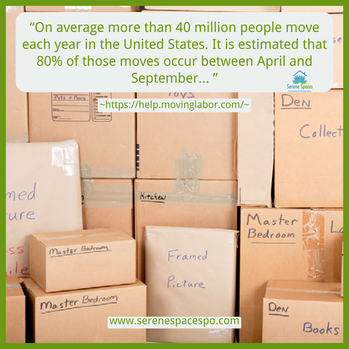
 Spring is here! Which can only mean that moving season, or PCS Season as the Military calls it, is upon us. I thought that it was only fitting that we talk about moving during April, the Month of the Military Child. As a former military family, we have had our share of moves and have learned a lot of tips and tricks that help make the move go a little smoother. A few lessons I have learned: DECLUTTER – Not only is it great to declutter on the front end for weight purposes (the heavier the load the more you are charged), but also because it gives you less to put away when you get there. One of my kids “favorite” games that they get to play before a move is “keep or go”. We go through their rooms and we figure out what toys, clothes, and belongings they want to keep and what can go (donate). Example: I hold up a shirt and they tell me if they want to keep it, or if it goes (it doesn’t fit or they don’t love it anymore). You should hear the groans I have gotten when I am in pre-move mode and I bring an arm full of shirts out of their closet. They know their favorite game is inevitable. But think about it, wouldn’t you rather weed out all the excess prior to a move and donate, than have to take the extra time to unpack it just to find out you don’t have room or it doesn’t even fit your kids anymore? CONTAIN- This can help ensure that unpacking is more streamlined. I learned a huge lesson on our first PCS move, if you don’t contain the small items before the packing process, then you will be picking them out of the box one by one at the next place. We had movers dump ALL of my son’s toys (2 at the time) into a huge box. I had thought that I had prepped everything by putting the like items together, but boy was I wrong. It took me forever to unpack and re-sort all the toys that had gotten jumbled in the box enroute to our new duty station. After that first move, I started to contain all the small items when prepping for moves. Ziploc bags are great for keeping small toys like action figures or Barbie accessories together. A few rounds of plastic wrap around puzzles and board games keep the pieces where they should be. Rubber bands are great for preventing cords from being a tangled mess when you unpack. INVENTORY- Always make a picture inventory of the furniture, electronics, and other valuable items in your home. Having a picture of these items, along with a picture of the serial number is a huge help if you need to claim an item when you get there. This has saved me more than once. I tend to over document everything. I take pics of all the furniture, electronics, rooms as they are set up before the prep begins, etc. One time I had a mover label on the paperwork that the item was “dented” or “scratched”, but because I photographed and videoed everything, I had proof that it wasn’t and therefore we were able to get the item repaired free of charge. If I hadn’t been able to prove it, then I would have had to pay to fix it myself. MOVING BINDER- Having important documents, insurance paperwork, inventory lists, contact info for movers, account numbers and company info, zipper pouch for receipts, are just a few things that are great to hand carry with you and can save you so much time. These are also accessible online nowadays, but I always find it easier to have a copy of everything in one place so that I am not logging in and searching several sites. SCHOOL RECORDS- Hand carrying your kids records from one school to the next makes registrations a much smoother process. Also, having their last report card and any 504 plans or IEP copies with you will ensure they are getting the proper placement and resources from the get go. I usually check before the move to see what the requirements are for your kids to start school. That way if you need to get vaccine records transferred to a certain form (like Florida) you can have that done ahead of time so you can have it ready to go. In some moves we needed to make sure to get the kids registered asap so that they had enough days to meet the requirement for moving on to the next grade. CATEGORIZE Let’s face it, items like artwork hardly ever end up in the same room they were before. It all depends on that wall space available as to where it goes in the next house. Before the movers get there, I take all the artwork off the walls and line them up together. This also helps ensure that anything that might get overlooked (like bathroom art) all gets onto the truck (items found last minute don’t always get packed properly). TCHOTCHKES – Same goes for tchotchkes. Gather all of them from around the house and group them together (I usually use the dining room table). This helps ensure all the delicate items get wrapped together and not in a random box underneath something heavy (it happens).  BOX # 1- Have a “unpack first” box. Put anything that you will need right away into a box that is clearly labeled, so that you can function while your house is being unpacked. Great things to put in this are: can opener, a roll of toilet paper, hand soap, paper towels, bedding, paper plates & cutlery, commonly used tools (screwdrivers & hammer, and measuring tape ), and cleaning supplies. ELECTRONICS - After you inventory your electronics (pictures of all the angles, serial numbers, a video of them turning on and off, etc.) make sure to disconnect them yourself right before the movers get there. This way you can control how the cords and remotes are packed. If you are going on a long haul move or don’t have housing set up yet, make sure to remove any batteries from the remotes (do this all your electronics). When you disconnect them, label the cord and remote (if you don’t have access to a label maker, painters tape and sharpie work great). Then either put them in a Ziploc or tape it to the item itself. If you happen to have the box they came in, make sure to sit them beside the item so the movers can use it. Searching for remotes and cords while you unpack just adds to the frustration. ZIPLOCS- ANYTHING that is small should be placed into a Ziploc, bin, or something to ensure that it does not get wrapped in just a piece of brown paper. When you are unboxing your household goods there will be a TON of packing paper. If it gets wrapped in a piece of packing paper and shoved in with all the other packing paper, there is a good chance that you will not notice it and it will get thrown out. P.S. Do not forget to do this with screws or any hardware as well. Label and contain! Trust me, you will thank yourself later. LINENS- Wash all bedding, curtains, dining room linens, towels, etc and put in large vacuum seal or Ziploc bags along with a couple dryer sheets or sachets. Nothing is more devastating than being exhausted from unpacking and you finally find your bedding or towels only to realize they smell musty, or something has spilled in the box. Nor do you want to have to wash it all while you are unpacking. VALUABLES- Hand carry ALL valuables. I purchased a fireproof document bag to hand carry all our important documents (birth certificates, marriage certificate, immunization records, passports, etc.) and any jewelry that was valuable. If you have receipts for these items that’s even better. Keep them with you or scan and email it to yourself. This is a way to prove the worth of the item. MOVING DAY - Walk the movers through the house and let them know if there is anything fragile or valuable. Also, walk around while the movers are packing. That way you can remind them of any special requests. I also feed my movers lunch, provide Gatorade and water and tip them. They work hard, showing appreciation for what they are doing can go a long way. NO PACK ZONE- Block off a “no pack” zone for packing days. Anything that needs to be separated, so that it doesn’t end up in a box needs to go in there. I usually designate the largest bathroom or closet as this space. I then put our luggage and items we will transport ourselves in there. All clothing, jewelry, toiletries, etc. I even put the pets in there and any of their belongings that will travel with us, so they stay safe and out of the way of the movers. I also put a large sign (or use a bright colored painters tape) to mark this area (as well as tell them when they do their walk through). 15. LABEL in detail- Write more detailed info on the box if you think it needs it. I learned, while working with Serene Spaces, how to use QR Codes on the boxes. This is especially great for seasonal items, boxes that you know might need to be stored when you get to your new location, or just all your boxes. It is pretty great to be able to scan the QR code and see the contents of your box without having to open it. Air tags are also a great item to use in your boxes (if allowed with your company). It is kind of fun to watch where your Household Goods are as they travel to their new destination. 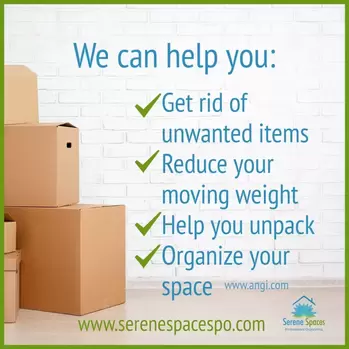 With so many decisions to make, the whole moving process can be overwhelming. This is where professional organizers can be a great asset. We can come in and take some of these stressors off your plate. Here are just a few of the many things we can do, to help “lighten the load” (pun intended ).
Remember, it is perfectly normal to feel overwhelmed at times. Moving can be a challenging time for anyone, whether you have moved 20 times, or this is your first. However, with the right support and guidance it can feel a little less daunting.  Sam Zapata, Professional Organizer,
Serene Spaces Professional Organizing
0 Comments
Ready to tackle your organizing projects and not sure where to start. We are giving you all the deets here today, follow these steps and you are sure to make some major progress on your organizing goals. Just remember you are only one person and can only do so much at a time so don't get down on yourself if things aren't going as quickly as you imagined. Stay with it and your future self will thank you!
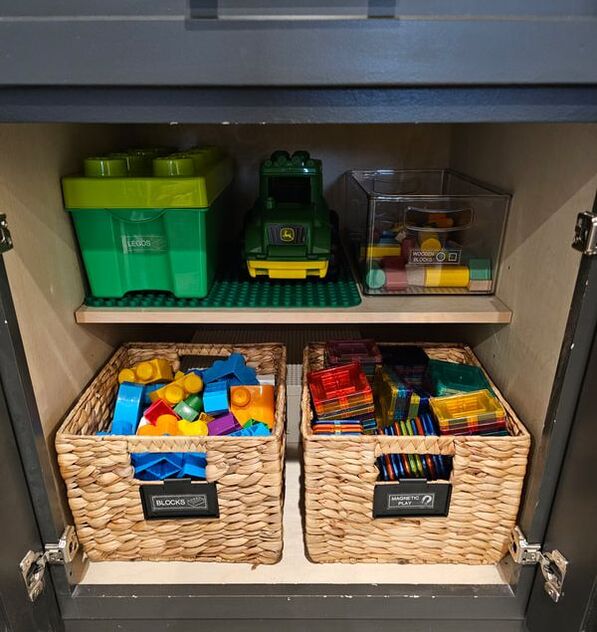
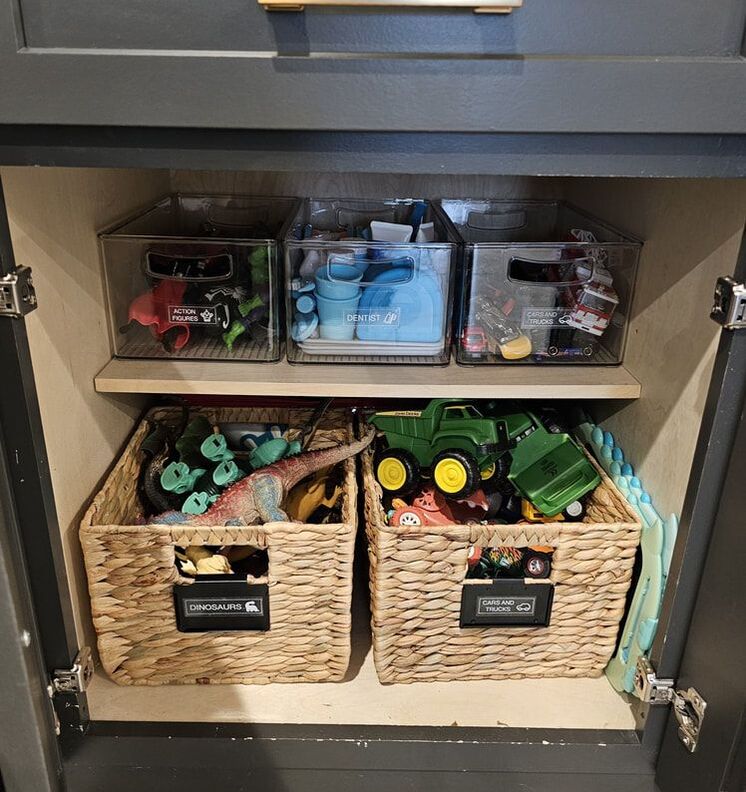
I know, I know. A professional organizer wanting to talk about labels. Shocker, right? What if I told you though, that Cricut labels and labels from my P-touch label maker aren’t my favorite labels? That might shock you. I mean don’t get me wrong, I do LOVE using the Cricut and my P-touch Label maker. I have labels from both in about every space of my home. As Professional Organizers, we label ALL THE THINGS. Why do we love labels so much? Is it because they make the bins look pretty or because it makes us feel more in control of where things go or are we just too lazy to look in the bins? Well, I guess being lazy isn’t too far off. That’s kind of why I love my house organized, I am too lazy to go look for things. If it is in the right spot, then I am not wasting time and energy rummaging through the drawers and cabinets looking for another lost item. As Professional Organizers, we love helping you simplify your life. By using labels, you can take the guesswork and effort out of putting things away. When we have labels, others in the household are more willing to help AND put it in the right spot. 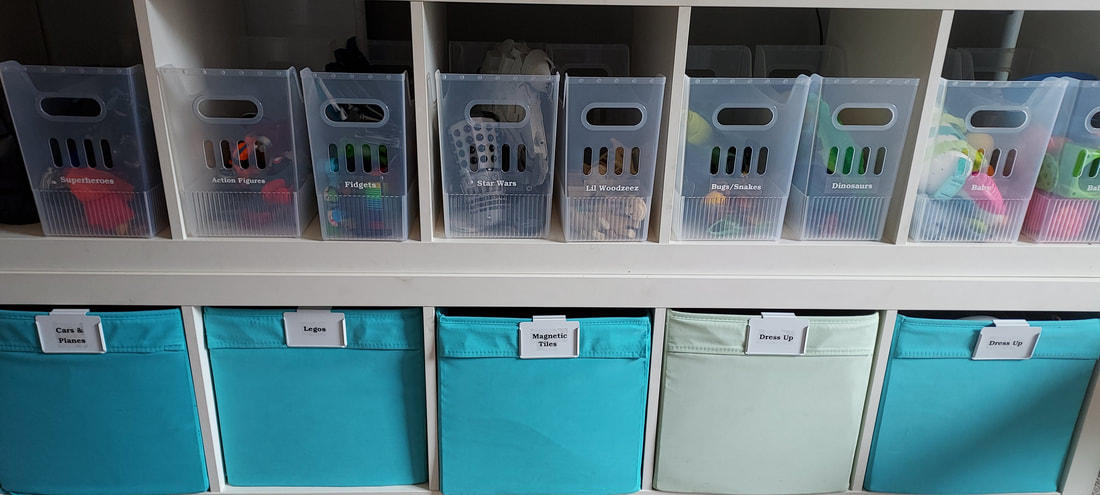 So… what are my favorite types of labels? PICTURE LABELS! When my kids were small, years ago, I was not the fun mom. Every evening (ok sometimes more often), my kids had to clean up their toys. If they were big enough to dump the toys, they were big enough to help clean them up. I learned right away that it is hard for kids to remember where something goes if they can’t read the label. That’s when I started putting Picture Labels on all the bins. My oldest is 20, so this was back before I even knew label makers existed. I would take a picture of the toys in a bin or find an example online, write the word underneath and attach it to the pull handle of the bins. The picture paired with the word also helped them to learn to read. Once I discovered a laminator, I upgraded to laminating the picture card. This made the labels so much more durable. Once the kids could see what went inside, it was a game changer. They were a lot more willing to help and they learned independence and life skills along the way.
When my kids got old enough to be in school full time, I started working as a Paraprofessional at their school in California. This is where I really learned the value of a picture label, as well as a laminator and Velcro 😊. Not only did picture labels help kids put their toys away, but it helped them navigate life! I was blessed to be asked to work in a self-contained Autism classroom. Not only did my love of picture labels grow, but I fell in love with working with the kiddos as well. I learned so much in my 3 years there, about how a simple picture label (of all sorts) could help a child learn routines, communicate their wants and needs, READ, and yes even clean up their toys in the classroom. 😊 Over the years, before I found my dream job as an organizer, I have been fortunate to work in several different ESE classrooms, in 3 different states. No matter where I worked, whether it be in an Autism Classroom, EBD classroom, or 3 year old Preschool classroom, it was evident that picture labels and communication were an essential part of life. Next time you drive down the street, look around and notice how many “picture labels” of all sorts are EVERYWHERE. 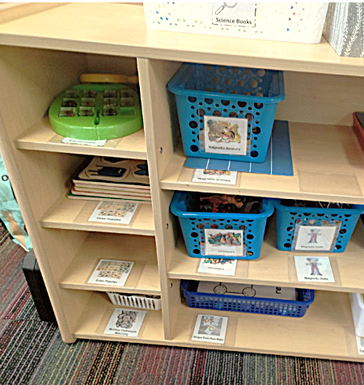 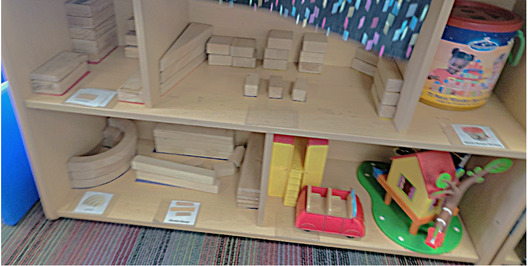 I think I mastered my craft though, when I worked in a 3-year-old preschool classroom (talk about fun 😊). I volunteered to take on the role of making sure all the bins in the classroom had an updated picture label (shocker, huh?). I knew it helped some, but I really realized the value the label had when I was sick on a Monday. At the end of every week, we changed out the activities and toys in each center. I would then put out all the matching labels or make them over the weekend if we had new activities or just didn’t have a label to match. Well, one weekend I got sick and didn’t return to school until Tuesday. I was immediately told by my co-workers that the kids were so upset that the bins didn’t have their labels. One kid had even exclaimed “how are we supposed to know where to put anything! We need Ms. Sam back.” I then heard about the lack of labels again and again as the kids arrived at the classroom that morning. At the beginning of this school year I received an email asking me to share the file and template I had used, so that they could continue to use the same system. So, if you have a loved one that would benefit from picture labels, don’t hesitate to use them. I mean you can always call me to make some for you; picture labels are kinda my jam. It doesn’t matter what type of labels you use, just remember….LABEL.ALL.THE.THINGS. 😊
Did you have a chance to check out the article I was interviewed for in Parents Magazine Florida? If not check it out here and don't forget to check out some of the other great articles in the January issue.
HELPING YOUR KIDS STAY HEALTHY: PHYSICAL AND MENTAL WELLNESS PODCASTS FOR KIDS 18 SIMPLE WAYS TO INFUSE EACH DAY WITH LEARNING Are New Year's Resolutions your thing? If they are and they work for you, GREAT! I am truly glad to hear it! New Year's Resolutions used to be my thing but I seem to keep drifting further and further away from them. For many years I would go hard for several weeks and then life would happen, I would slip up and then start to lose steam. Once I lost steam I would start to feel like I failed, lose all further motivation, and then it was over. My resolution was just another failed attempt. Sometimes. I think there is so much pressure that it becomes easy to get defeated if/when you slip up or fall short. When I decided that New Year's Resolutions no longer worked for me I decided to choose a word to focus on and that felt more intentional and something easier to stick with, which was precisely what I likely needed during those particular seasons. I am here to remind you that if you set a goal or a resolution and it's no longer working for you it's ok to say that. It's ok to scratch that and set a goal that is better suited for you and your current season of life no matter what time of year it is. Also, don't hear me wrong...your goals don't have to be centered around productivity, having more, or being more of a certain way, etc. Your goals should truly be something that adds value to you and your life. Sometimes that means taking something off of your plate or setting boundaries in areas where stress seems to creep into your life. 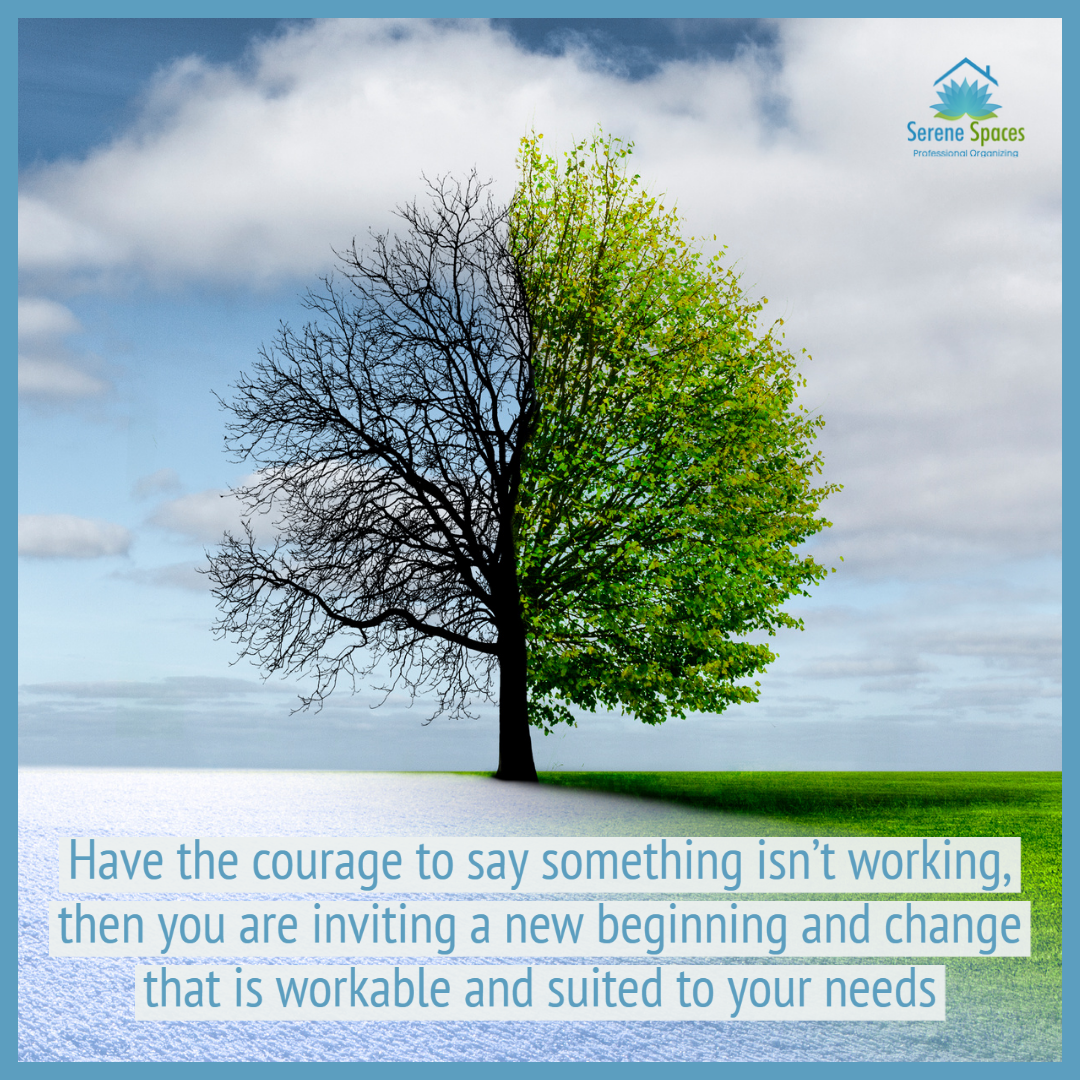 As I get older the years seem to go by faster so while I think it is very important to be intentional, set goals, and have a vision for your future, I don't particularly like the pressure of a New Year's Resolution and I want more than just one word. I think the power is in constantly evaluating your goals throughout the year and staying motivated to strive to reach those goals. The past couple years I have created a vision board and I do really enjoy that process and the diversity of it. For me it usually encompasses goals that are personal, family centered, and business related. I hang it in my closet where I see it in the mornings and evenings (sometimes more). It seems to be a great visual reminder of what is important to me so I don't forget in the day to day hustle. I also love that if my goals shift I can just adjust. Nothing says what you put on your vision board is permanent. The vision board is meant to keep you pushing towards goals that work for you. I think it's important to remember that progress happens in the small steps that lead to larger distances so our small steps DO make a difference! My final reminder is to give yourself grace if you slip up or if things don't go perfectly the way you want. We are all human and just because things aren't going perfectly or you have had a set back it doesn't mean you should give up. Maybe it's just time to reevaluate and reset! I would love to hear your thoughts... Do you set resolutions? intentional words? Goals? Vision Boards? Is the new year just another day for you? Check out this recent article in Southern Living that we were featured in: 9 Things You Should Never Store In Your Pantry, According To Professional Organizers By Melissa Locker 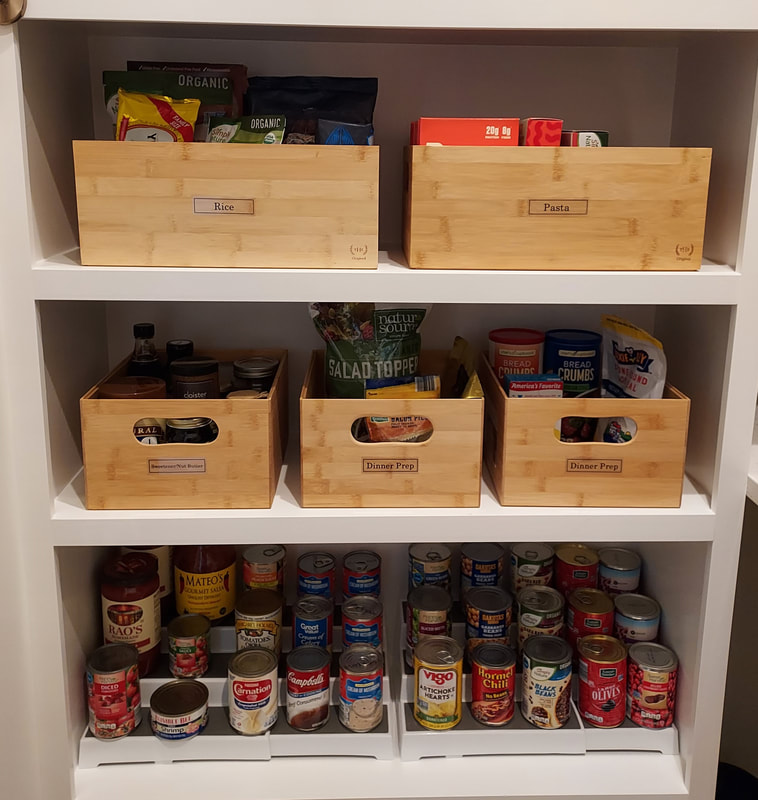 Keeping that food fresh can also make your pantry look photo-worthy. “Decanting [food] into clear containers or glass jars that are airtight can extend shelf life and keep bugs away,” adds Cassie Thompson of Serene Spaces Professional Organizing and Consulting in St. Augustine, Florida. “This not only keeps items fresh but will give you a great visual of what is left and when it is time to replenish. If you don't want to commit to decanting, chip clips—even clothes pins—work well to keep bags closed tight and lengthen shelf life Check out the entire article here:
 Check out the recent Redfin article we were featured in: The Ultimate Room- By-Room Decluttering Checklist | Redfin Creating a decluttering checklist is an excellent way to begin organizing your home and simplifying your life. Along with helping you take stock of your belongings, lists can help you stay on track and prioritize the areas that need attention. However, following your checklist can be difficult with so many distractions in everyday life. Luckily, we can help. What do you think of our tip? Do you ever struggle with getting rid of things that you know deep down you don't really want anymore? 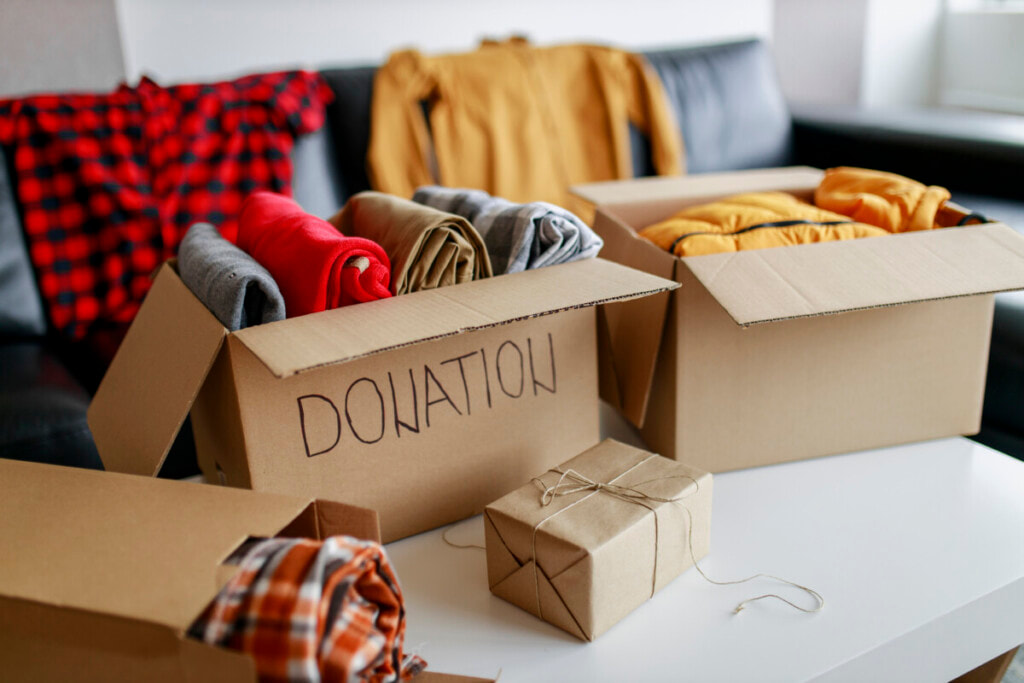
Giving Thanks-November Newsletter by Cassie Thompson
We were named a top decluttering expert by Redfin. Check out the article we were featured in:10/9/2022 Check out the recent Redfin article we were featured in: How to Declutter Your Room: 12 Tips for Managing Bedroom Clutter Once and For All Your bedroom is a special place; it's the last space you see before you go to bed at night and the first space you see when you wake up. Unfortunately, a cluttered bedroom can be stressful and make it difficult to relax and get a good night's sleep. But how do you declutter your room and turn it into a relaxing sanctuary? To help you get started, we've gathered tips and insights from some of the top organizing and decluttering experts in the country. Read on to learn how to create a clutter-free, peaceful bedroom.  Check out this Redfin article we were featured in: Expert Tips for Creating Space in a Small House Living in a smaller home doesn’t mean you have to give up half of your belongings to make it more livable. The key is to get creative and create space wherever possible. Whether it’s having multipurpose furniture or using over-the-door racks, there are plenty of simple solutions to make the most of your space! Before you get to it, check out these organizing experts’ best tips to create space in a small house. 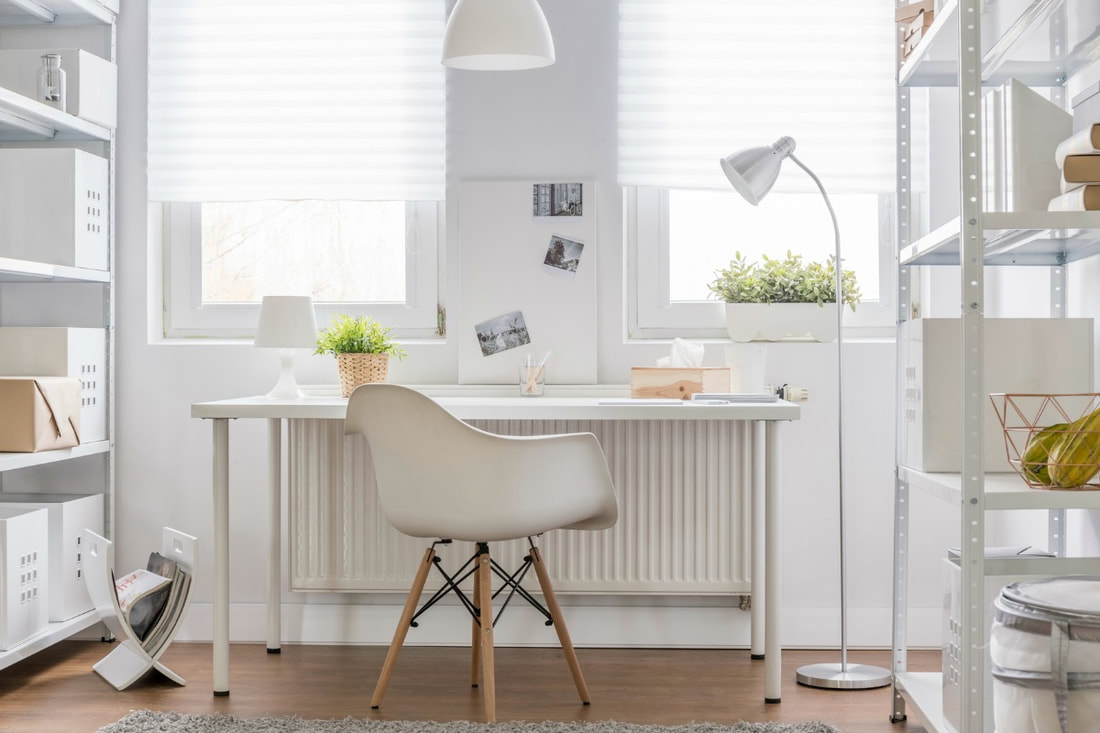 |
Cassie ThompsonProfessional Organizer, mother, wife, friend, and lover of Jesus. Archives
April 2024
Categories
All

|

 RSS Feed